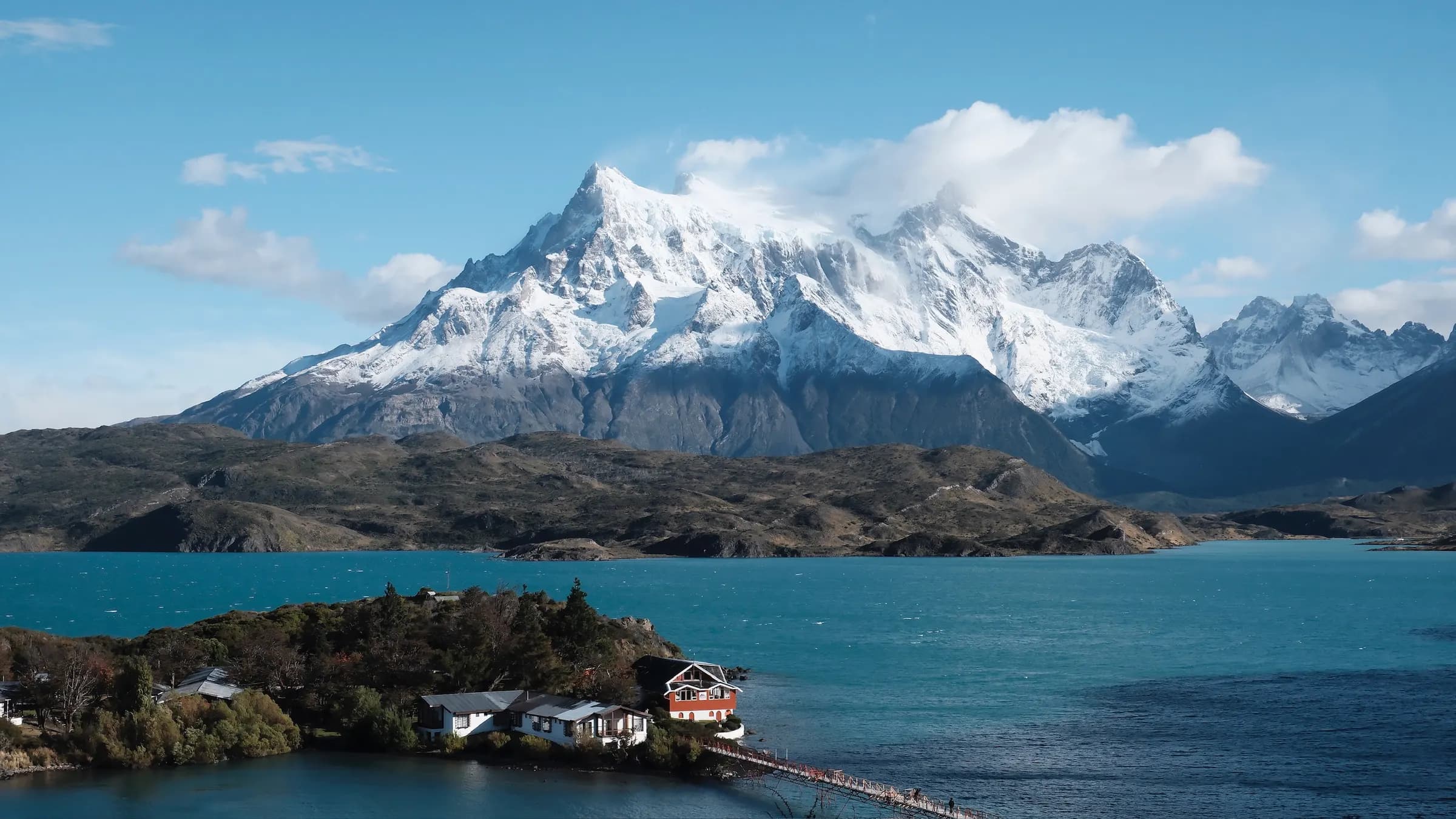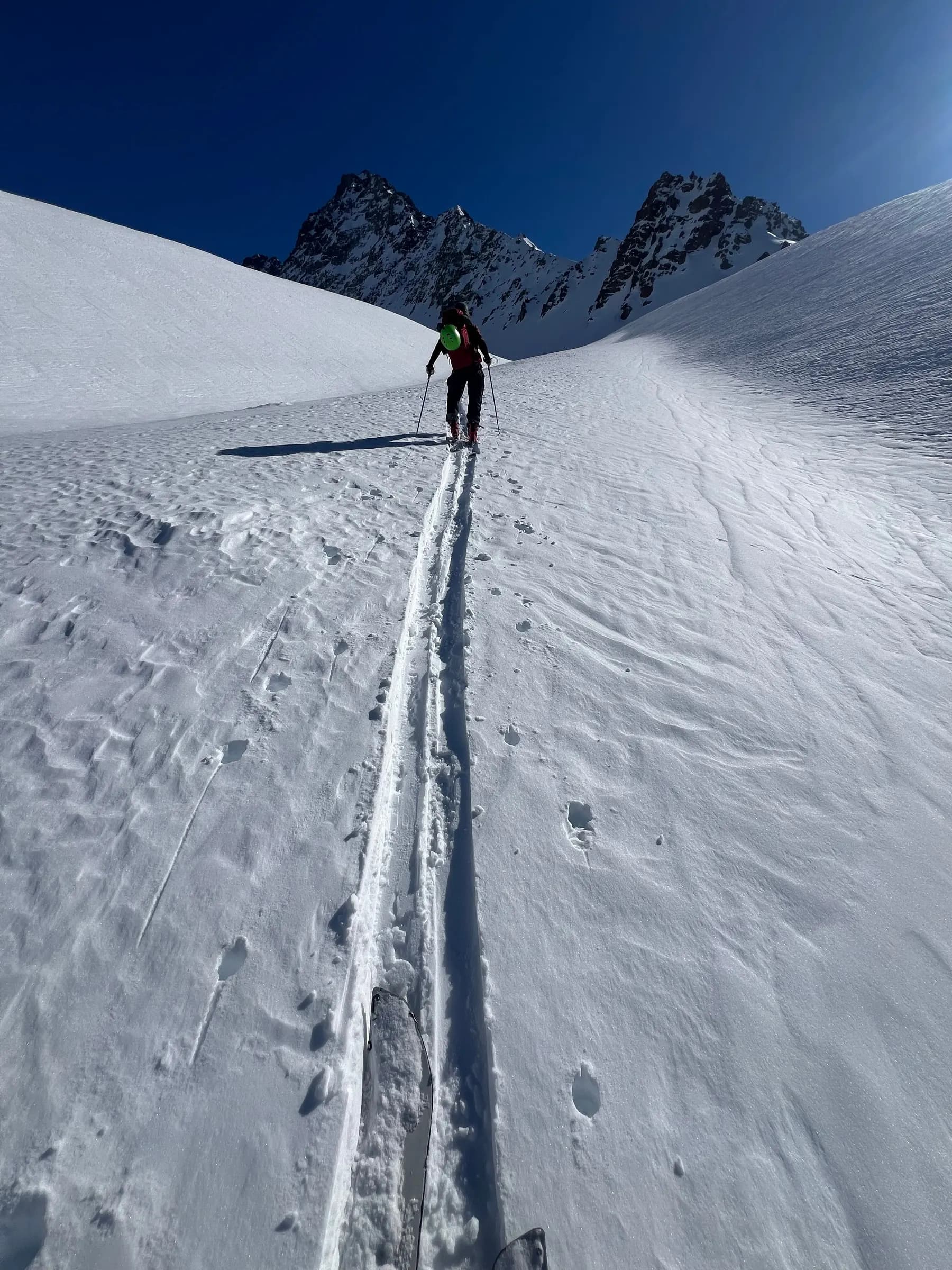
Backcountry skiing in Chile happens in two places: the Central Andes, where the resorts above Farellones are about an hour from Santiago and you skin into terrain no lift serves, and the southern volcanoes, where a day on skins ends with a long descent on spring snow. The season runs from June to October, and we guide trips in both.
This guide explains where the zones are, when to come, what level each one asks for and how safety works, so you can choose the trip that fits you. The dates, distances and rules below come from SERNATUR, Ski Portillo, Andeshandbook and our own trip data.
Backcountry skiing in Chile at a glance
- Season: the ski centers usually open between late May and June and the season generally runs until September, extending into October in some southern areas, according to SERNATUR. Our backcountry trips run from June to September near Santiago and from July to October in the south.
- Best months: July and August are the most reliable months for snow cover in the Central Andes. September and October bring longer days and spring snow, and the southern volcanoes run from July to October.
- Zones: Tres Valles and the Cajón del Maipo near Santiago, and Lonquimay, Villarrica and Osorno in the south.
- Level: you should already know how to skin, do kick turns and transitions, and ski variable snow off-piste. None of these days is the place to learn.
- Guides: every backcountry day is led by a certified mountain guide (UIAGM or national certification).
- Not included: travel insurance. It must cover backcountry skiing.
Where is Chile's backcountry?
Chile's backcountry has two areas, the Central Andes near Santiago and the volcanoes of the south, and four ways to ski them: two on skins within a couple of hours of Santiago, one on the volcanoes, and one by helicopter.
| Where | Base | Season | Level | Our trip |
|---|---|---|---|---|
| Tres Valles (El Colorado, La Parva, Valle Nevado) | About 1 hour from Santiago | June to September | You already skin and ski off-piste | Tres Valles Backcountry, 3 days |
| Cajón del Maipo | About 2 hours from Santiago | June to September | Intermediate to advanced off-piste, basic transceiver skills | Backcountry day in the Cajón del Maipo |
| Southern volcanoes (Lonquimay, Villarrica, Osorno) | Malalcahuello, Pucón, Puerto Varas | July to October | Advanced | Three Volcanoes Ski Traverse, 10 days; one-day ski ascents of Villarrica, Osorno and Lonquimay |
| Central Andes by helicopter | Leaves Santiago early | July to September | Real experience in deep, off-piste snow | Heli-skiing day |
Where do you ski backcountry near Santiago?
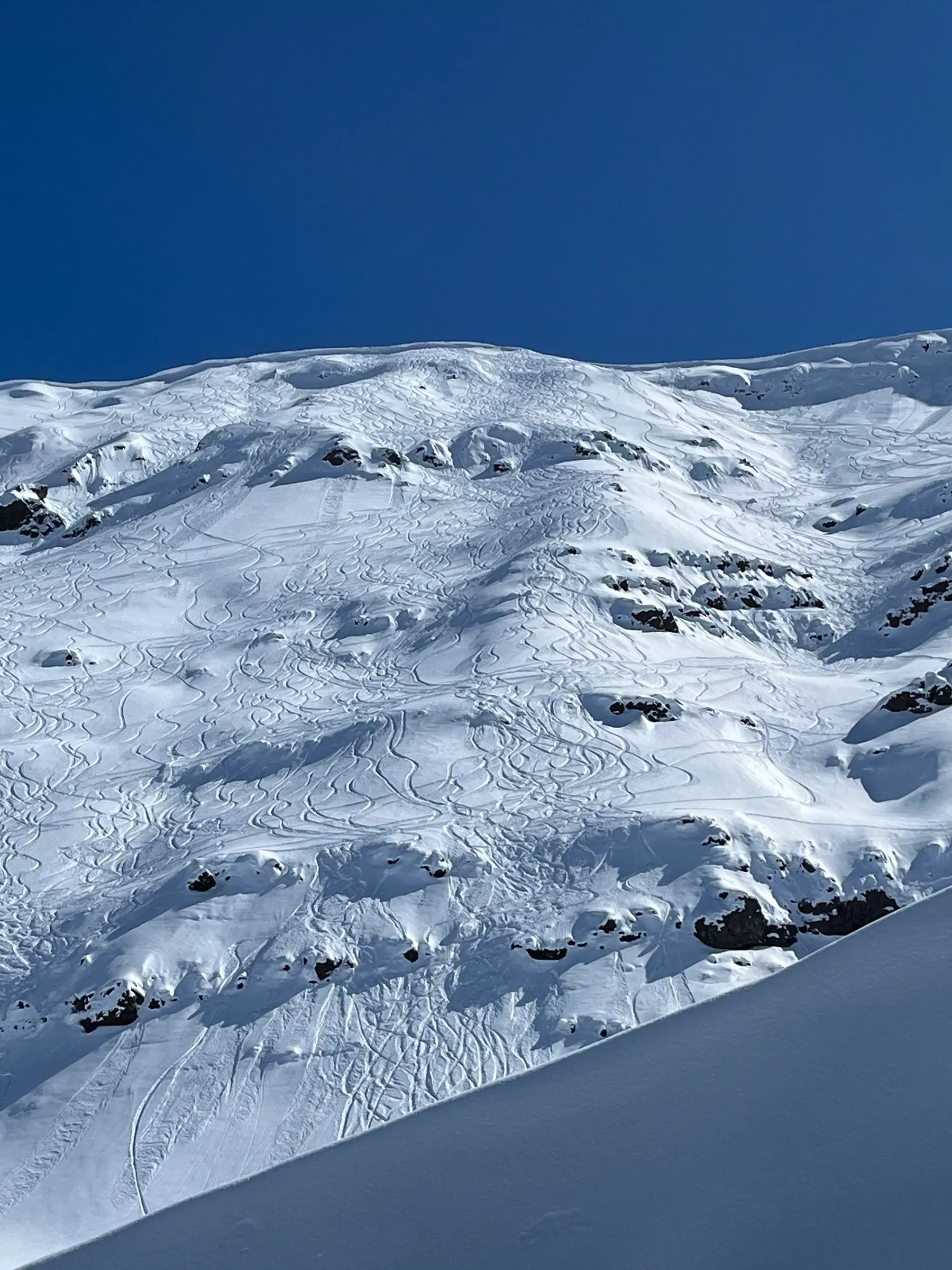
In Tres Valles, from the resorts above Farellones, and in the Cajón del Maipo, with no lifts at all. The resorts above Farellones are good starting points for touring because the lifts get you high quickly. That is why our three-day Tres Valles Backcountry trip starts there. A certified mountain guide (UIAGM or national certification) leads three days: Santa Teresita from El Colorado, Falsa Parva with a descent via La Chimenea from La Parva, and a tour toward Cerro El Cepo, a 4,309 m (14,137 ft) peak that Andeshandbook notes can be reached from both La Parva and Valle Nevado.
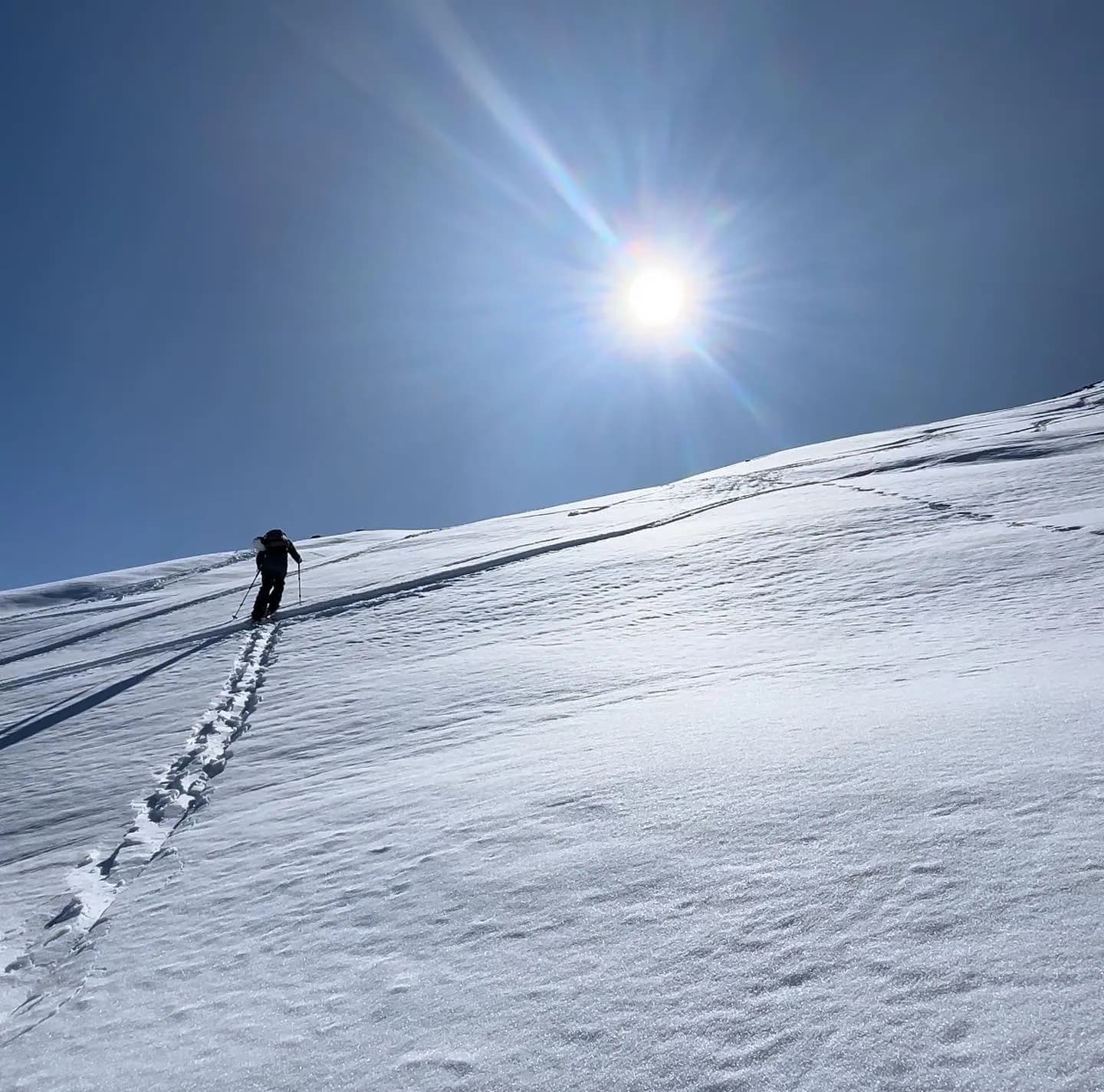
Avalanche safety equipment (transceiver, shovel and probe) is included. The trip runs from June to September for groups of 2 to 6 who already know how to skin and ski off-piste. It is not a course. For a shorter first step, see the single day in the Cajón del Maipo below.
Portillo's backcountry lines
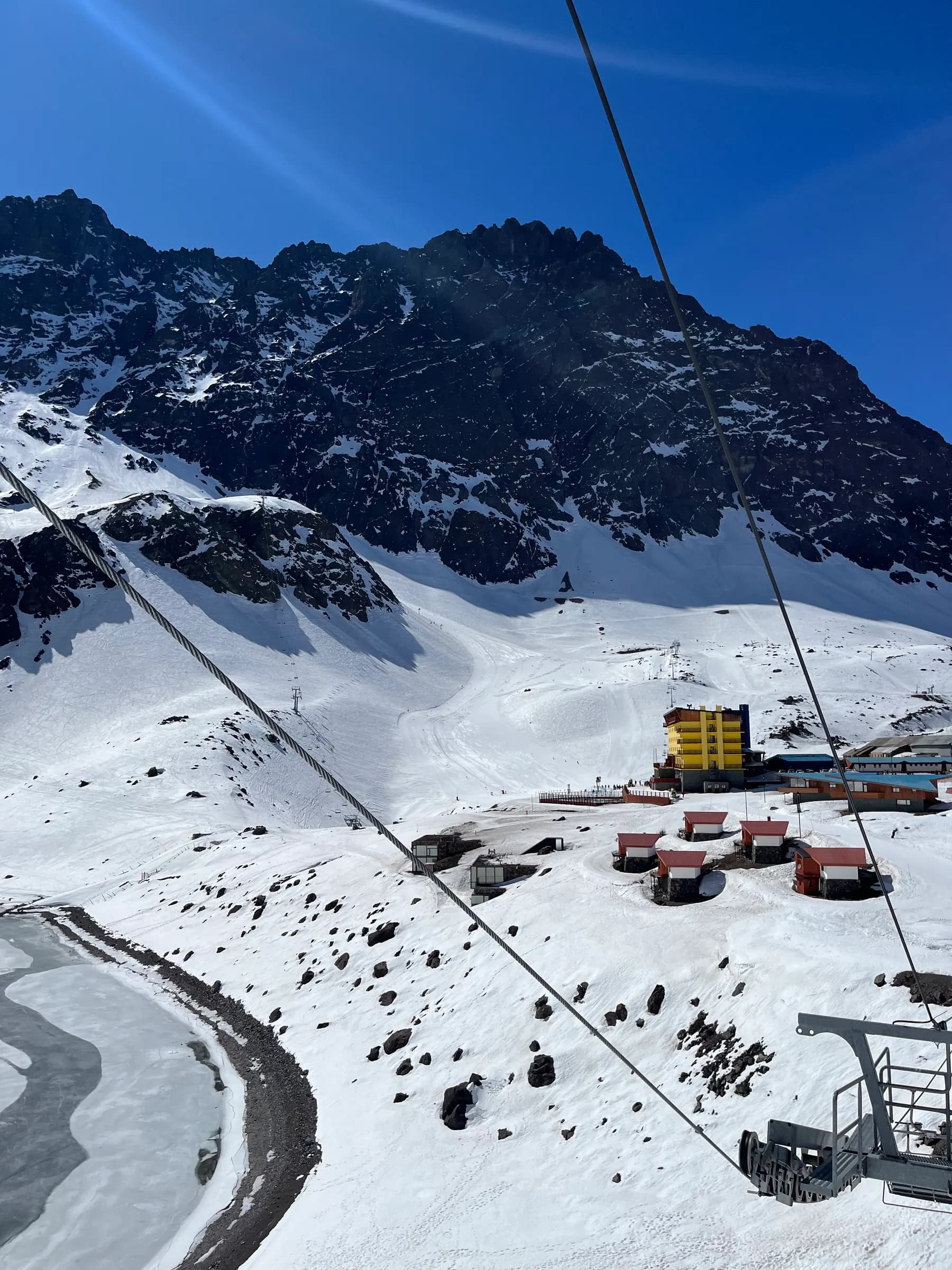
Portillo has its own backcountry lines: its own La Chimenea (a different line from the one at La Parva), Gargantita, Primavera and Toilet Bowl. The resort says they can only be skied when conditions are just right, by people with the right equipment and advanced knowledge of terrain and snow. Before leaving the ski area to reach this terrain, Ski Portillo asks skiers to speak with its snow safety director or operations manager, and it recommends hiring a guide to find the best lines.
Can you ski backcountry in the Cajón del Maipo without lifts?
The Cajón del Maipo is the canyon southeast of Santiago, and in winter its upper valleys hold snow with no lifts at all. That makes it the simplest way to try a real backcountry day from the capital.
Our backcountry day in the Cajón del Maipo starts with a transfer of about 2 hours from Santiago to Valle Las Arenas, at the foot of Volcán San José near Lo Valdés and Baños Morales. You climb for 4 to 6 hours and ski the couloirs your guide chooses for the day's snow. If the snowpack or visibility do not allow it, the alternative is Cerro Unión, at 3,658 m (12,001 ft).
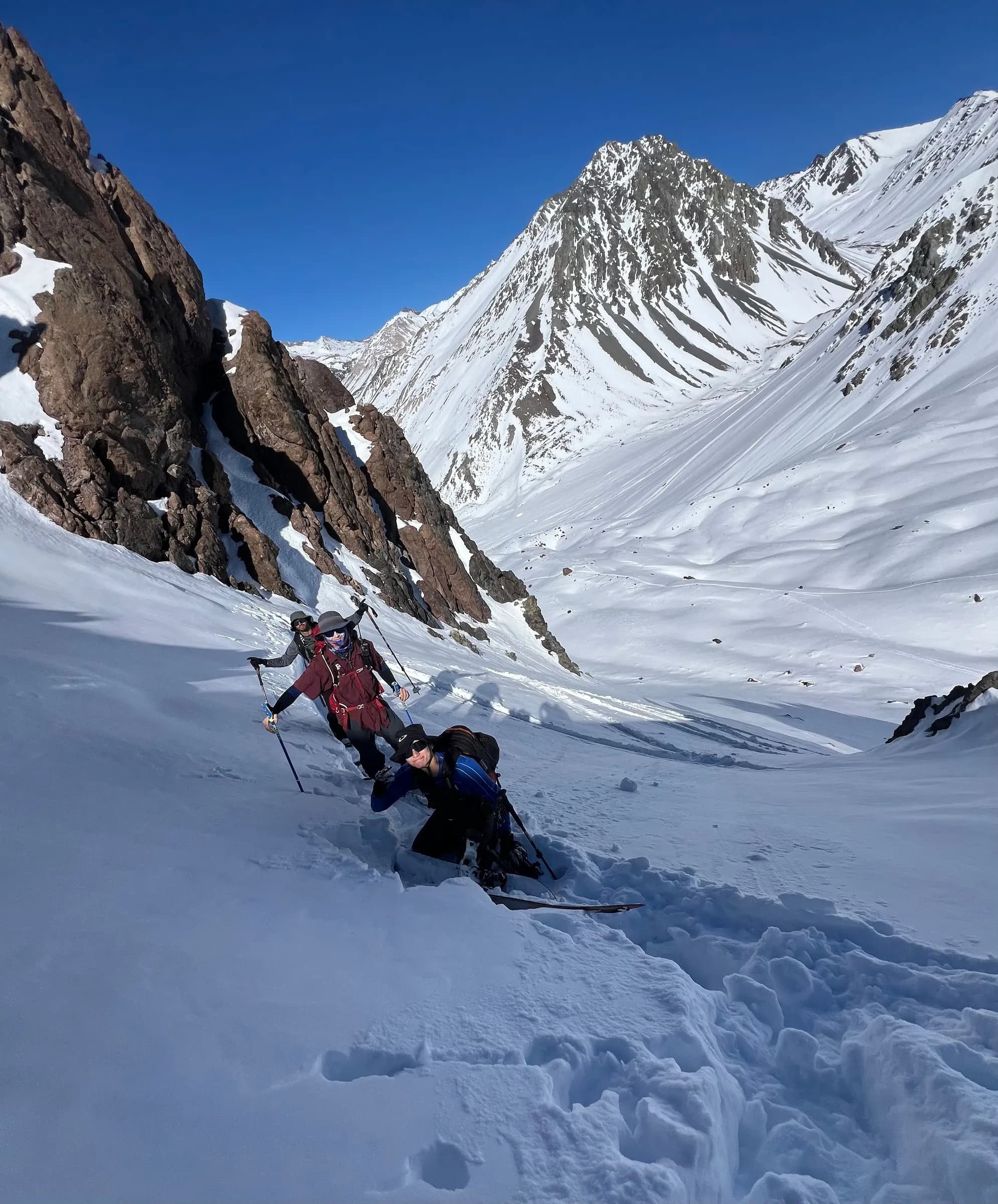
This day is for intermediate to advanced off-piste skiers who already know how to skin and have basic transceiver skills; it runs from June to September for groups of 1 to 6, with the avalanche kit (transceiver, shovel and probe) included and touring equipment available to rent. It is a good step between resort skiing and the three-day trip near Santiago.
Southern volcanoes and heli-skiing
South of Santiago the Andes get lower and the ski terrain moves onto volcanoes: single cones with open slopes, forest at the base and descents of 1,000 m (3,281 ft) or more. For the heights, park rules and summer climbs, see our guide to climbing volcanoes in Chile. Here is how they work in winter.
Villarrica, Lonquimay and Osorno on skis
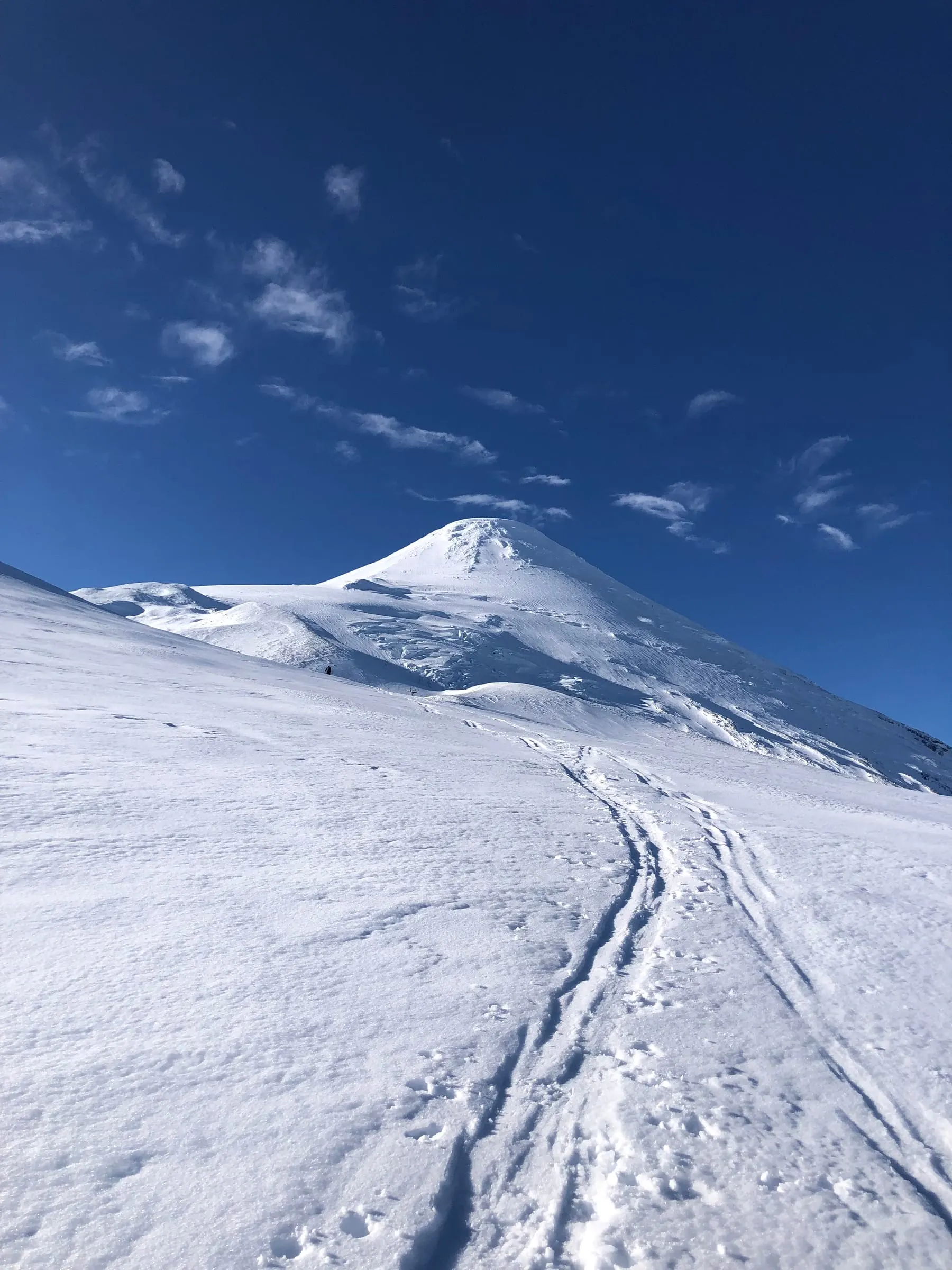
On Villarrica (2,847 m, 9,341 ft), above Pucón, the climb to the crater takes about 4 to 5 hours. From July to October the Villarrica ascent finishes with a ski descent for advanced skiers. Your guide decides on the day how far you go on skis and how far on foot.
For experienced ski tourers, our Three Volcanoes Ski Traverse puts the winter season into one trip: ten days of touring with a certified mountain guide on Lonquimay (2,865 m, 9,400 ft) on day 3, Villarrica on day 7 and Osorno (2,652 m, 8,701 ft) on day 9, plus touring days around the Corralco ski area chosen according to snow conditions. It is for advanced ski tourers who are comfortable with long ascents on skins, kick turns and transitions, and skiing steep, variable snow. Groups are 4 to 6 people, it runs from July to October, and small-group fixed departures are planned for July and August.
Heli-skiing in the Andes
Heli-skiing reaches snowfields and glaciers that no lift serves. Our heli-skiing day leaves Santiago early, flies to terrain in the Central Andes up to about 3,000 m (9,843 ft) and returns to the city in the evening. A certified mountain guide leads every descent, and avalanche equipment and an airbag backpack are included. Groups are 2 to 4, it runs from July to September, and you need real experience in deep, off-piste snow. The number of flights and descents always depends on snow, wind and visibility on the day.
When is the best time to ski backcountry in Chile?
The best months depend on the zone. SERNATUR notes that exact season dates change every year with the weather, so treat any opening or closing date as a target, not a promise.
| Month | What to expect | Our backcountry trips running |
|---|---|---|
| June | The season starts, but how much terrain is open depends on early storms. Good for flexible travelers | Tres Valles Backcountry, Cajón del Maipo |
| July | The most reliable period for snow cover, and the busiest weeks | All of them, including the heli-skiing day and the volcanoes |
| August | Same as July. Fixed departures of the Three Volcanoes Ski Traverse are planned for July and August | All of them |
| September | Longer days and spring snow. Some resorts start to close, while others and the southern areas keep going | Tres Valles Backcountry, Cajón del Maipo, heli-skiing, volcanoes |
| October | The southern areas can run into October | Villarrica ascent and Three Volcanoes Ski Traverse |
If you have a choice, July and August give the most reliable snow near Santiago. If spring snow on a volcano is what you are after, plan for September or October. Tell us your dates and your level, and we will tell you which month fits.
How does safety work?
Backcountry terrain in the Andes is high and remote, and every one of these days depends on the snowpack, the wind and the visibility. Snow in the Central Andes arrives in storms, with long spells of clear weather in between, and that rhythm decides what is possible. This is how we manage it.
- A certified guide leads every day. Our guides hold UIAGM or national certification. Decisions about routes and snowpack are a guide's job, and your guide can change the objective, turn the group around or end the day at any point. On the Cajón del Maipo day, for example, the alternative is Cerro Unión if conditions do not allow the planned couloirs.
- Avalanche equipment is part of the day. A transceiver, shovel and probe, and the skills to use them. They are included on the Cajón del Maipo day and on Tres Valles Backcountry; the heli-skiing day also includes an airbag backpack, and on the Three Volcanoes Ski Traverse the avalanche equipment can be rented.
- Resort rules still apply. Where a resort has a snow safety team, as Portillo does, its rules on leaving the ski area and its closures during the day come first.
- Insurance has to cover it. Many travel policies exclude off-piste skiing or ski touring; read yours before you book (see the FAQ below).
- We never promise a line or a summit. If the day does not allow it, we change it.
Every mountain has its own conditions, risks and joys, and that is the main reason to ride with locals. The big ski resorts of the Andes are in the central zone, with bases between about 2,500 and 3,000 meters above sea level, higher than most resorts in Europe and Asia.
Chilean backcountry has great terrain if you know where to go. Near Santiago you find steep lines and light powder, in places deep in the Cajón del Maipo, for example. If you are more experienced, we can take a helicopter to remote zones in El Maple.
Further south, around the volcanoes, conditions change with the local geography, and by September you find spring powder, which is a joy to ski. And the Patagonian Andes, further south still, have terrain of their own, but that is another trip.
What skills, fitness and gear do you need?
Who this is not for. If you have never skinned uphill, have not skied off-piste at a resort, or your insurance excludes ski touring, these days are not the place to start. Begin with off-piste days at a resort and a touring course, and come back the next season; our guide to skiing in Chile covers the resorts.
- Experience. You should be comfortable on skins, with kick turns and transitions, and skiing variable snow.
- Fitness. Climbs are long. The Cajón del Maipo day asks for 4 to 6 hours of climbing, and Villarrica takes about 4 to 5 hours to the crater. Coming down on tired legs is part of the day.
- Avalanche skills. Basic transceiver skills at minimum. Check what each trip includes; on some the equipment is provided, on others it is rented.
- Gear. A full touring setup, avalanche equipment and a daypack big enough for a shovel and probe. On the volcanoes you also need ski crampons and boot crampons, an ice axe and a helmet.
- Altitude and sun. Valle Nevado's village sits at 3,025 m (9,924 ft). Keep your first day light, drink water and bring high-SPF sunscreen, lip balm and goggles or sunglasses with good UV protection. Our guide to skiing in Chile explains the altitude advice in detail.
Which backcountry trip should you choose?
- You ski off-piste at resorts, already know how to skin, and want a first real backcountry day: the backcountry day in the Cajón del Maipo.
- You can skin and ski off-piste and want several days near Santiago: Tres Valles Backcountry.
- You are a strong skier and want a volcano summit with a ski descent: the Villarrica ascent, or Osorno or Lonquimay, from July to October.
- You are an advanced ski tourer and want the whole winter in one trip: the Three Volcanoes Ski Traverse.
- You have real experience in deep snow and want lines no lift reaches: the heli-skiing day.
To book, send an inquiry from the trip's page with your dates, your level and your group; we confirm availability by email. If none of these fits your dates, level or group, tell us what you have skied before and when you want to travel, and we will build a tailor-made trip around it. The Central Andes and the south each have their own pages: Central Andes and Lake District.